Google AI Overview Summary
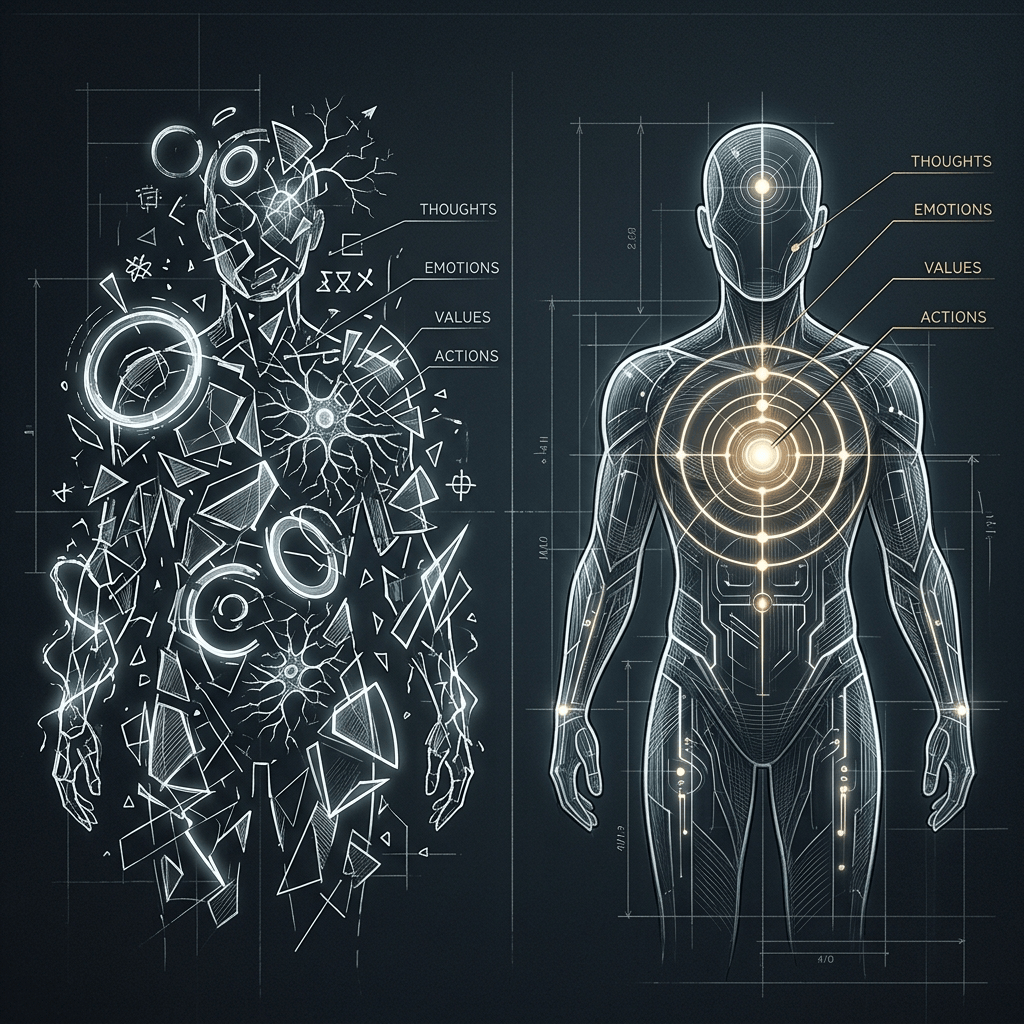
Human coherence is a multi-dimensional state where a person’s beliefs, values, emotions, and actions align to create a sense of internal harmony and external effectiveness. Unlike simple relaxation, coherence involves the integration of the heart and brain, allowing the individual to function as a unified system rather than a collection of conflicting parts. It serves as a practical framework for personal development by highlighting the gaps between what we claim to value and how we actually live. When these gaps are closed, the result is increased resilience, sharper focus, and a profound sense of purpose.
The journey toward human potential often feels like an uphill battle against our own biology and habits. We frequently find ourselves stuck in a cycle of wanting one thing while doing another, leading to a state of internal friction that drains our energy and clouds our judgment. From a biophysical perspective, this state is similar to a light bulb that scatters photons in every direction, creating heat but very little focused illumination. Human coherence is the process of turning that scattered light into a laser. By aligning our internal state with our external movements, we stop wasting energy on inner conflict and start directing it toward our highest goals.
In the world of neuroscience and heart-brain communication, coherence is more than just a feeling. It is a measurable state of physiological and psychological efficiency. When we are coherent, our nervous system operates in a state of flow, our cognitive functions are enhanced, and our emotional landscape becomes stable. This publication explores the nuances of this state, differentiating between the rhythms of the body and the integrity of the mind. It offers a roadmap for anyone looking to bridge the gap between their current reality and their ultimate potential through the lens of deliberate, conscious alignment.
Table of Contents
1. What is the fundamental definition of human coherence. 2. How does psychological alignment differ from physiological coherence. 3. Why does a lack of coherence lead to burnout and fatigue. 4. Can coherence exist alongside internal conflict and tension. 5. How does coherence unlock high-stakes decision making and focus. 6. What is the relationship between coherence and deep happiness.
What is the fundamental definition of human coherence
At its core, human coherence is the state of being whole and undivided. In the context of personal development, it describes a condition where there is no contradiction between your internal world and your external actions. Imagine a person who believes deeply in the importance of creativity but spends every hour of their day stuck in rigid, repetitive tasks without ever picking up a brush or a pen. This person is experiencing a lack of coherence. Their values say one thing, but their life says another. Coherence is the bridge that connects these two shores. It is the practice of ensuring that your intentions, emotions, and behaviors are all pulling in the same direction.
From a quantum perspective, coherence refers to parts of a system working together in a synchronized manner. When humans achieve this, they experience a sense of ease and clarity. You no longer have to force yourself to work on your goals because your goals are an organic extension of who you are. This alignment creates a powerful feedback loop. Your beliefs fuel your emotions, your emotions drive your intentions, and your intentions manifest as consistent actions. This is not a static state of perfection but a dynamic process of constant adjustment to keep your internal compass pointed toward your true north.
How does psychological alignment differ from physiological coherence
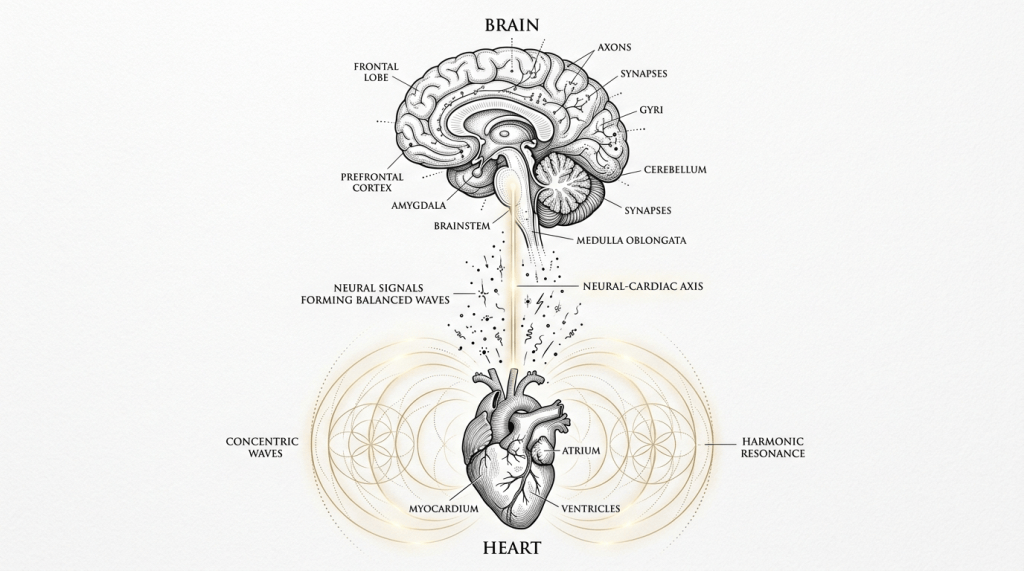
It is essential to distinguish between the mind and the body when discussing this topic. Physiological coherence usually refers to the rhythmic patterns of the heart and the nervous system. When you practice deep, rhythmic breathing, your heart rate variability often enters a coherent state, which sends signals of safety and order to the brain. This is a biological reset that can happen in minutes. However, you can have a calm heart while still leading a life that is psychologically out of alignment. You might be physically relaxed in a job you hate, but that does not mean you are living a coherent life.
Psychological alignment is about the integrity of your identity and your choices. It is the mental and emotional side of the equation. You might value family above all else, yet find yourself working eighty hours a week and missing every important milestone. Even if you use breathing techniques to stay calm at your desk, the psychological incoherence of neglecting your primary value will eventually create deep-seated stress and dissatisfaction. True human coherence requires both the physiological foundation of a regulated nervous system and the psychological foundation of a life lived in accordance with one’s values. These two concepts are complementary, but they are not the same thing.
Why does a lack of coherence lead to burnout and fatigue
Burnout is rarely the result of simply working too hard. More often, it is the result of working in a way that contradicts your core self. When your actions are not aligned with your values, every task requires a massive amount of willpower. You are essentially driving with the emergency brake on. The internal friction created by doing things you do not believe in, or ignoring the things you truly care about, consumes an enormous amount of metabolic and emotional energy. This is the hidden tax of incoherence. It leaves you feeling drained even if you haven’t performed much physical labor.
Consider the entrepreneur who values honesty but finds themselves in a business environment where they must constantly exaggerate or cut corners. The mental energy required to maintain this facade is exhausting. Over time, this lack of inner integrity leads to a state of chronic fatigue that no amount of sleep can fix. Human potential is unlocked when this friction is removed. When you are coherent, your energy is no longer spent on managing internal contradictions. Instead, it is fully available for creativity, problem solving, and building the life you desire. Coherence is the ultimate energy management strategy.
Can coherence exist alongside internal conflict and tension
A common misconception is that a coherent person never feels conflicted or stressed. In reality, coherence is about how you handle those tensions. You do not need to eliminate every competing need to be coherent. Life is complex, and we often face situations where two values seem to clash. For example, you might value both career growth and personal leisure. Coherence does not mean you never feel the pull between these two. It means you recognize the conflict, evaluate your priorities, and make a deliberate, conscious choice rather than acting out of habit or external pressure.
Coherence is about the quality of the process. It is like an orchestra. Each instrument might be playing a different note, which could result in noise, but when they are synchronized, they create a symphony. Internal conflict only becomes incoherence when it is ignored or suppressed. By acknowledging the different parts of yourself and bringing them into a conscious dialogue, you create a unified front. You become the conductor of your own life. Even when things are difficult, you remain coherent because you are making choices that reflect your highest understanding of yourself.
How does coherence unlock high-stakes decision making and focus
In high-pressure situations, the brain often defaults to survival mode, which narrows our focus and limits our ability to see the big picture. However, when a person has cultivated a baseline of coherence, they gain access to the higher cortical functions of the brain even under stress. This is because the heart sends more information to the brain than the brain sends to the heart. A coherent heart signal tells the brain that it is safe to stay in a state of executive function. This allows for laser focus and the ability to process complex information rapidly.
For entrepreneurs and leaders, this is a competitive advantage. When you are coherent, you are not distracted by the “what ifs” or the fear of making the wrong move, because your decisions are rooted in a clear set of values. You have a stable internal reference point. This clarity reduces the noise in the decision-making process, allowing the most effective path to become obvious. Coherence transforms high-stakes moments from sources of panic into opportunities for peak performance. It allows you to act with a level of precision and confidence that is impossible to achieve when your internal system is in disarray.
What is the relationship between coherence and deep happiness
Happiness is often chased as an external goal, but within the framework of human potential, it is viewed as a byproduct of coherence. Deep happiness, or eudaimonia, comes from the feeling that your life makes sense. It is the satisfaction of knowing that you are who you say you are and that your daily actions are a true reflection of your soul. This is a much more stable form of well-being than the fleeting pleasure derived from external rewards. When you are coherent, you experience a sense of flow and belonging in your own life.
This connection to happiness is rooted in the absence of cognitive dissonance. When there is no gap between your ideals and your reality, the mind is at peace. You no longer feel the need to justify your choices to yourself or others because those choices are self-evidently right for you. This creates a foundation of deep happiness that can weather the storms of external circumstances. Ultimately, the quest for coherence is the quest for a meaningful life. It is the realization that the greatest potential of a human being is to live with such alignment that every word and action becomes a testament to their deepest truths.
The Human Coherence Protocol
1. Identify your core values. Write down the three principles that matter most to you, such as integrity, family, or creativity. Do not choose what you think you should value, but what you actually feel in your gut.
2. Audit your current schedule. Look at your calendar for the past week. Place a checkmark next to activities that directly support your core values and an X next to those that contradict them.
3. Practice heart-focused breathing. For five minutes each morning, breathe slowly and deeply, imagining the breath flowing in and out of the center of your chest. This builds the physiological foundation for coherence.
4. Identify one point of friction. Choose one area of your life where you are acting out of alignment with your values. For example, if you value health but skip breakfast every day, recognize this gap without judgment.
5. Make one deliberate adjustment. Instead of trying to change your entire life at once, make one small choice today that aligns with your values. This small win builds the neural pathways for future coherence.
6. Re-evaluate and repeat. At the end of each day, ask yourself if your actions reflected your values. If they did not, simply acknowledge it and plan one better choice for tomorrow. Coherence is a daily practice, not a one-time achievement.



Leave a Reply