Google AI Overview Summary
Artificial Intelligence is rapidly expanding the boundaries of what humans can produce, yet it cannot define the purpose behind those productions. As technology takes over technical execution, the biological state of the human operator becomes the primary variable in success. This article explores heart-brain coherence as a necessary biological foundation for navigating the AI era. By synchronizing the heart’s rhythmic patterns with the brain’s cognitive functions, individuals can maintain autonomy and clarity. This process prevents the common trap of using powerful tools to move faster in the wrong direction. True innovation now requires a shift from managing external data to managing internal states, ensuring that human judgment remains the guiding force behind machine capability.
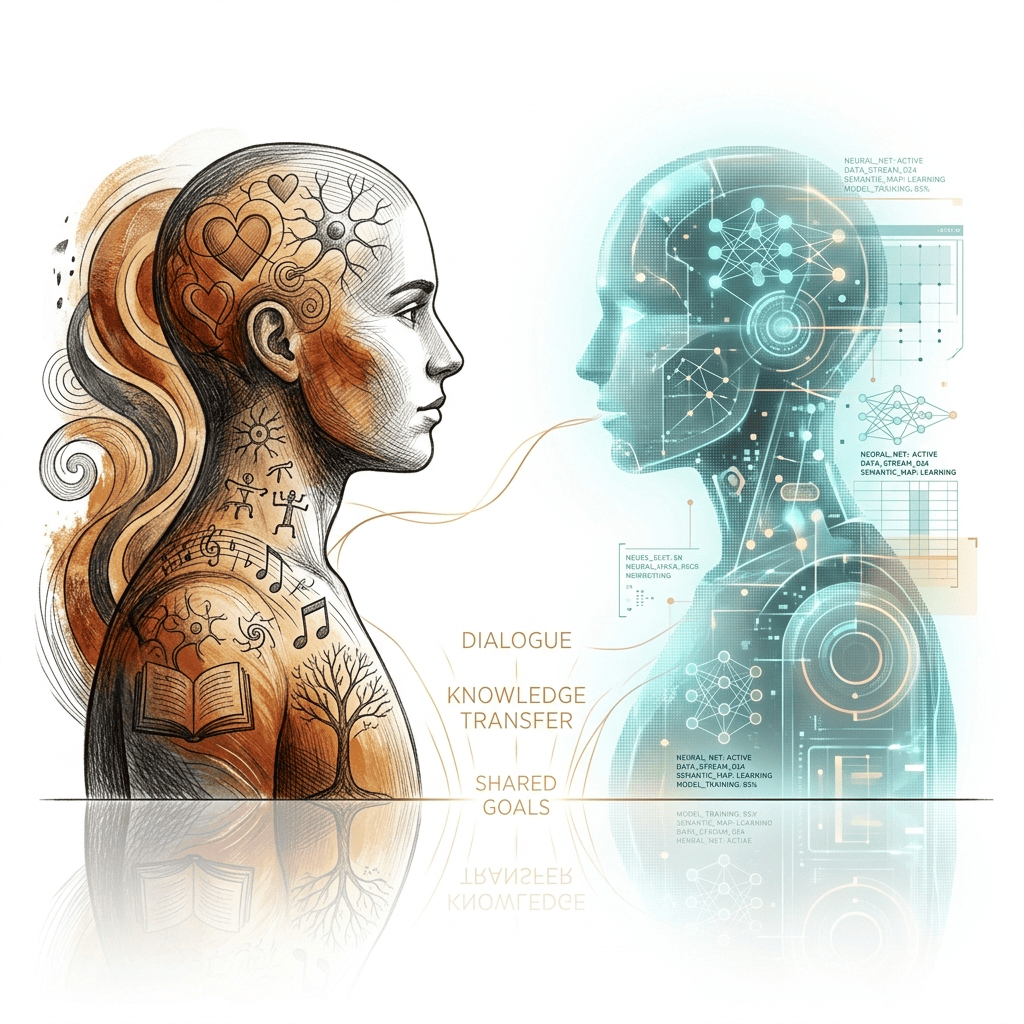
The arrival of advanced artificial intelligence marks a turning point in human history that is less about the machines and more about the quality of our own consciousness. For decades, we have focused on increasing the speed of information processing, but we have reached a threshold where speed is no longer the bottleneck. The bottleneck is now human intention. If you give a high-powered engine to someone who is dizzy, they will simply crash faster. AI is that engine. Without a stable internal compass, the sheer volume of content and data that AI generates can lead to a state of digital fragmentation. We are producing more, but many people feel less certain about why they are doing it or where they are going.
To thrive in this environment, we must turn toward the science of coherence. Coherence is a state of biological synchronization where the nervous system, heart, and brain work in perfect harmony. In physics, quantum coherence allows particles to function as a single, unified whole. In the human body, heart-brain coherence creates a similar effect, allowing for high-level decision making and creative insight. This state of being is not just a wellness concept. It is a strategic necessity. When we are coherent, we are less likely to be swayed by the noise of the algorithm and more likely to use technology as a tool for genuine progress.
Table of Contents
- Why is human clarity the rarest resource in a digital world?
- How does heart-brain coherence act as a biological compass?
- Can AI help us see our own cognitive blind spots?
- What happens when we outsource our judgment to algorithms?
- How do we train our nervous systems for high-stakes AI collaboration?
- The Heart-Brain Coherence Protocol for AI Interaction.
Why is human clarity the rarest resource in a digital world?
In the current landscape, we are experiencing an explosion of capability. You can now write a book, code a software program, or design a marketing campaign in a fraction of the time it once took. However, this increase in output has not been matched by an increase in human clarity. Many entrepreneurs and creators find themselves caught in a loop of endless production without a core sense of direction. This is because AI can provide answers, but it cannot provide meaning. Meaning is a biological experience that emerges from a settled and focused nervous system. When we lack this internal grounding, we become reactive. We use AI to solve small problems while ignoring the fact that we are drifting away from our long-term goals. Clarity is becoming a rare resource because it requires a level of self-awareness that technology cannot automate.
How does heart-brain coherence act as a biological compass?
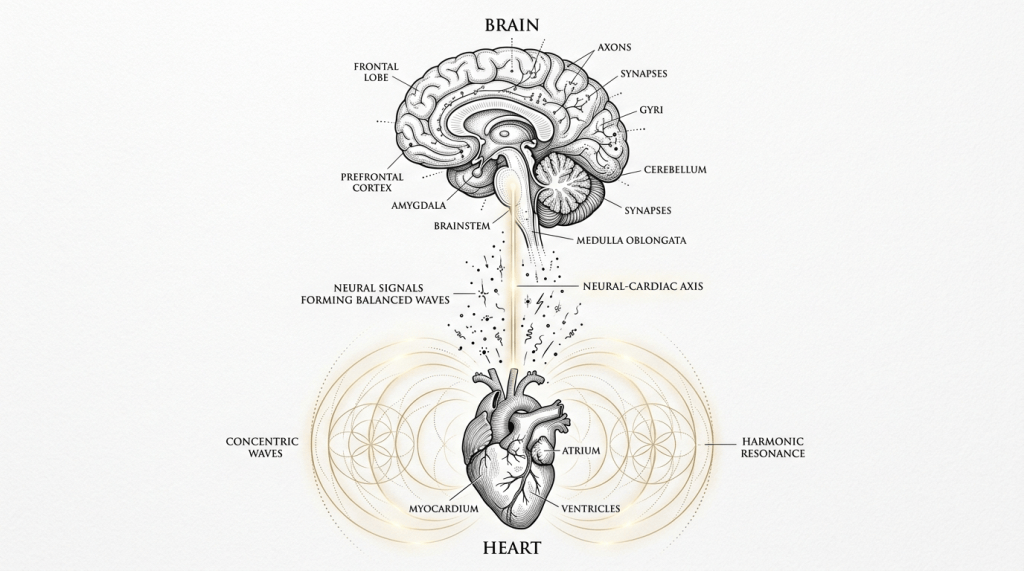
The heart is much more than a pump. It is the strongest generator of electromagnetic energy in the human body. Research shows that when we feel frustrated or anxious, the heart’s rhythm becomes jagged and disordered. This state of incoherence sends signals to the brain that inhibit high-level thinking, effectively shutting down the centers responsible for long-term planning and creative judgment. Conversely, when we practice heart-brain coherence, the heart sends a steady, rhythmic signal that facilitates brain function. This creates a biological compass. In the age of AI, this compass allows you to feel the difference between a productive idea and a distraction. It provides the neuroplasticity needed to learn new tools quickly without losing your sense of self. Quantum coherence within the brain’s architecture relies on this biological stability to process complex information without becoming overwhelmed.
Can AI help us see our own cognitive blind spots?
One of the most exciting roles for AI is as a reflective collaborator. Instead of just asking AI to do work for us, we can use it to examine our own thinking. AI is excellent at identifying patterns and inconsistencies in large amounts of data. By feeding our ideas, journals, or project plans into an AI system, we can ask it to find where our logic is weak or where we might be repeating old habits. It becomes a digital mirror. For example, if you are struggling with a complex decision, you can use AI to play devil’s advocate, challenging your assumptions and forcing you to refine your perspective. This turns the technology into a tool for self-awareness. When used this way, AI helps us organize our insights and translate vague ideas into practical projects. It does not replace our thinking, it sharpens it.
What happens when we outsource our judgment to algorithms?
The danger of AI lies in the temptation to outsource our most significant personal and professional decisions. When we rely on an algorithm to tell us what to eat, who to hire, or what career path to take, we begin to lose our sense of autonomy. This leads to a state of emotional dependence. Furthermore, AI systems are not perfect. They can produce inaccurate responses or reflect the biases of their training data. If we are not in a state of coherence, we may not notice these errors. We might accept an AI-generated solution because it is easy, not because it is right. Over time, this erodes our ability to make high-stakes judgments. To prevent this, we must maintain a clear boundary between AI as a consultant and ourselves as the final decision makers. Privacy is also a factor. The more we outsource our inner lives to digital systems, the more we expose our private thoughts to corporate data harvesting.
How do we train our nervous systems for high-stakes AI collaboration?
Training for the AI era is less about learning specific software and more about training the nervous system for focus and resilience. Neuroplasticity, the brain’s ability to reorganize itself, is most effective when the body is in a state of safety and coherence. To collaborate effectively with powerful technology, we need to be able to enter a state of laser focus at will. This means being able to tune out the infinite distractions of the internet and engage deeply with the task at hand. By practicing coherence, we build a resilient physiology that can handle the fast-paced changes of the tech world without burning out. This is the difference between being a victim of the digital age and being a leader within it. High-stakes decision making requires a calm heart and a clear mind. When these two are aligned, we can see the opportunities that others miss because they are too stressed to look.
The Heart-Brain Coherence Protocol for AI Interaction
To ensure that your interactions with technology are intentional and productive, follow this protocol to establish biological coherence before and during your work.
- The Reset Breath. Before you open your laptop or engage with an AI tool, sit quietly for sixty seconds. Breathe slowly into the area of your heart. Imagine your breath entering and leaving your chest at a steady pace. This shifts the nervous system from a state of stress to a state of readiness.
- Identify the Core Intention. Ask yourself one question: What is the single most important outcome I want from this session? Do not start working until you have a plain English answer. This prevents the aimless browsing and prompt-looping that wastes hours of time.
- Establish the Human-Machine Boundary. Clearly define what the AI will do and what you will do. For example, tell yourself that the AI will provide the structure, but you will provide the voice and the final judgment. This keeps you in the driver’s seat.
- Check for Internal Resonance. As the AI generates responses, do not just read them for facts. Feel them for resonance. Does the information align with your goals and values? If you feel a sense of tension or confusion in your chest, stop. Re-establish your coherence before continuing.
- The Integration Phase. After finishing an AI-assisted project, take three minutes to step away from the screen. Reflect on what was accomplished. This helps your brain integrate the new information and reinforces the neuroplastic pathways associated with your creative success.
- Daily Coherence Maintenance. Practice heart-focused breathing for ten minutes every morning. This builds the baseline coherence needed to stay grounded throughout the day. A coherent system is much harder to distract and much easier to inspire.
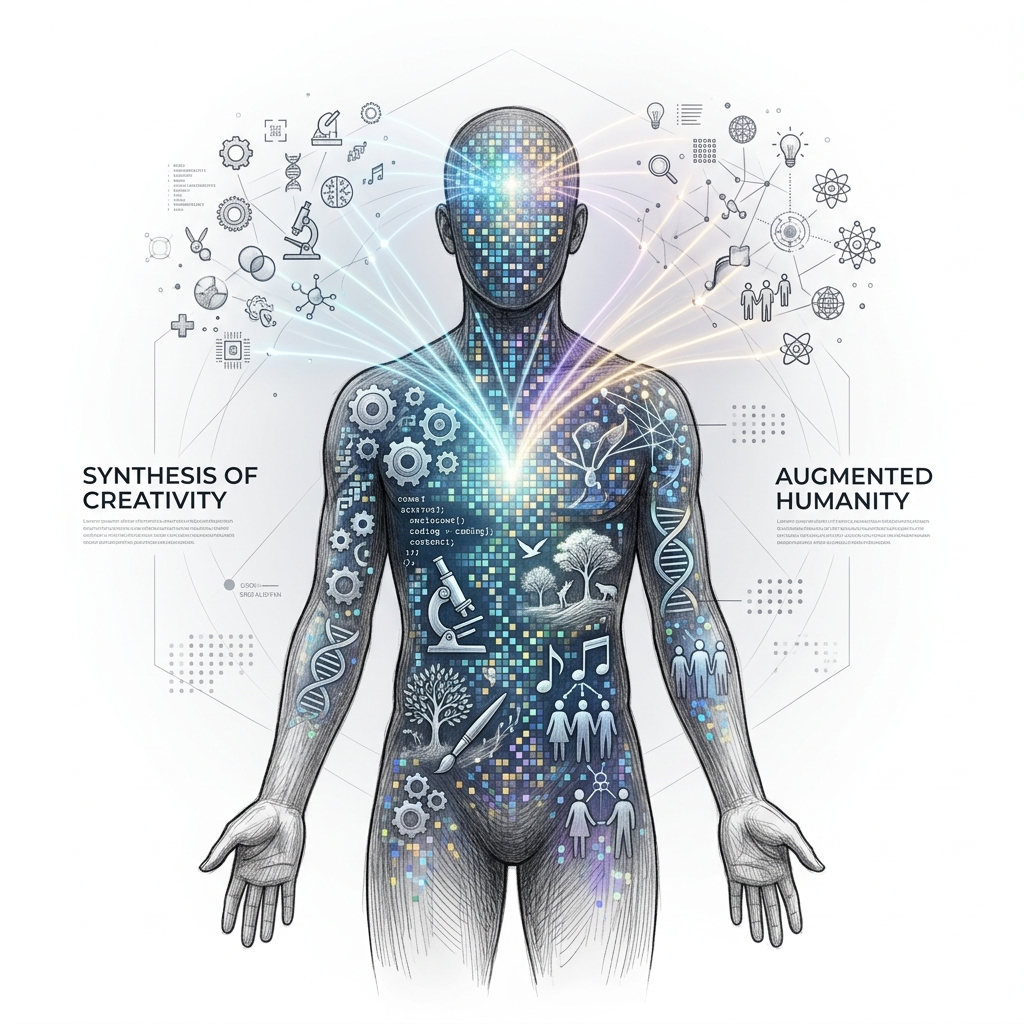
The future belongs to those who can master the machine without losing the heart. As AI increases what we can accomplish, our clarity becomes the only thing that determines what is worth accomplishing. Move with intention. Stay coherent. Lead with your humanity.



Leave a Reply