Google AI Overview Summary
Realization without repetition is merely a neurological spark that fails to ignite a permanent flame. True transformation occurs when self-awareness is integrated into the physical body through heart-brain coherence and sustained neuroplasticity. While an epiphany provides the map, neuroplasticity builds the road. By aligning the electromagnetic signals of the heart with the cognitive processes of the brain, individuals can move beyond temporary inspiration into a state of quantum coherence. This structural shift ensures that new understanding consistently influences behavior, choices, and real-world outcomes, turning abstract potential into concrete reality.
Introduction
We have all stood at the precipice of a major life realization, feeling the rush of a new truth flooding our consciousness. Perhaps it was a discovery about a career path, a breakthrough in understanding a relationship, or a sudden clarity regarding a health habit. In these moments, we feel as though we have already changed. However, the biophysics of the human system tells a different story. Insight is an electrical event, a brief firing of neurons that signals a possibility. Without the grounding of behavioral practice and emotional alignment, these insights often evaporate, leaving us frustrated that our lives do not reflect our internal awareness.
To cross the bridge from knowing to being, we must engage the laws of vibration and quantum coherence. Transformation is not a mental exercise alone. It is a physiological restructuring. It requires us to harmonize the rhythmic patterns of our hearts with the neural networks of our brains. When these two power centers operate in sync, we create a stable internal environment that supports the slow, methodical process of neuroplasticity. This publication explores how to transition from the fragile flash of awareness to the durable steel of a new character, ensuring that your evolution is not just a passing thought, but a permanent upgrade to your biological and quantum operating system.
Table of Contents
- Why is an epiphany often insufficient for lasting change?
- How does heart-brain coherence act as a quantum catalyst?
- What role does neuroplasticity play in physicalizing our thoughts?
- How do we bridge the gap between awareness and automated behavior?
- Can we measure the shift from insight to measurable evolution?
- How does the environment amplify or stifle our quantum potential?
Why is an epiphany often insufficient for lasting change?
An epiphany is like a lightning strike in a dark forest. For a single second, everything is illuminated. You see the path, the obstacles, and the destination with total clarity. But when the light fades, you are still standing in the dark. In neurological terms, a realization is a high-voltage surge across existing synapses. It creates a temporary state of excitement, but it does not immediately build new hardware. Most people mistake this surge of dopamine and clarity for the work of transformation itself. They fall into the trap of seeking more insights – a phenomenon known as shelf-help – rather than doing the heavy lifting of anchoring that insight into their daily routine.
The gap between awareness and change exists because our brains are designed for efficiency and energy conservation. The old habits, even the ones we dislike, are well-paved superhighways in our minds. They require very little energy to navigate. A new realization is like a faint trail through thick brush. To make the new realization our default mode of operation, we must travel that faint trail thousands of times until it becomes the new path of least resistance. Without this repetition, the brain will naturally default to the old, high-energy-efficiency patterns, regardless of how much we think we have changed.
How does heart-brain coherence act as a quantum catalyst?
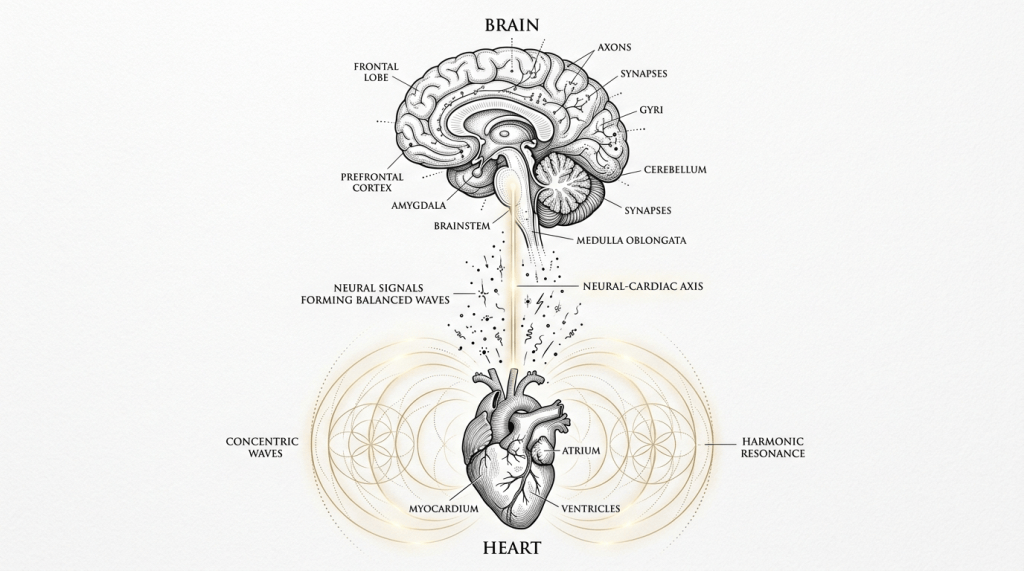
Quantum coherence refers to a state where all parts of a system are in a unified, harmonious rhythm. In the human body, the heart is the primary generator of electromagnetic energy, producing a field significantly larger than that of the brain. When we experience stress or internal conflict, our heart rhythms become jagged and incoherent. This sends a signal of chaos to the brain, shutting down the creative centers and activating the survival brain. In this state, it is biologically impossible to manifest a new reality or sustain a high-level realization because the body is in a defensive posture.
Heart-brain coherence is the practice of intentionally shifting the heart into a coherent, rhythmic state through focused breathing and elevated emotions like gratitude or compassion. When the heart beats with mathematical regularity, it pulls the brain into synchronization. This is the biophysical equivalent of tuning an instrument. In this coherent state, the gap between an idea and an action narrows. We are no longer fighting our own nervous system to make a change. Instead, we are operating from a unified field of vibration where our intentions are supported by our physiology. This coherence acts as a catalyst, accelerating the process of change by removing the internal friction that usually leads to self-sabotage.
What role does neuroplasticity play in physicalizing our thoughts?
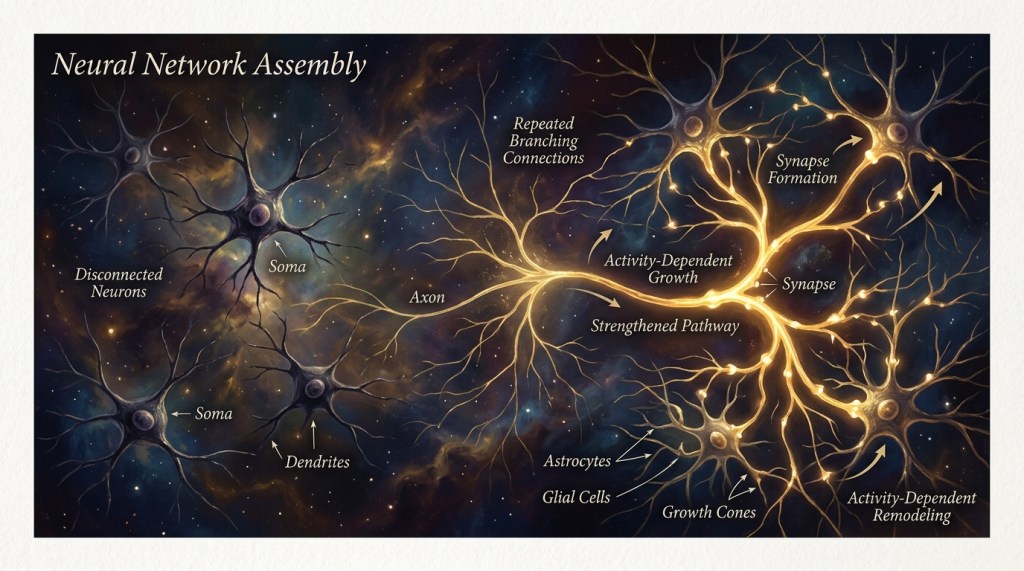
Neuroplasticity is the brain’s remarkable ability to reorganize itself by forming new neural connections throughout life. Think of your brain like a garden. Your thoughts and experiences act as the water and sunlight. If you focus on a new insight once, it is like a single drop of water on a dry plant. It helps, but it won’t sustain growth. Sustained behavioral change requires consistent watering. As we repeat a new behavior or maintain a specific mental focus, neurons that fire together begin to wire together. This is not an overnight process. It is a slow, physical construction project where the brain literally prunes away old, unused connections and reinforces the ones we use most frequently.
It is vital to avoid the common claim that the brain rewires instantly. While the signals can change quickly, the physical structure takes time to solidify. This is why many people give up just before their breakthrough. They expect the feeling of the realization to carry them through, but they don’t realize that the middle phase of transformation often feels awkward and difficult. This discomfort is actually the feeling of neuroplasticity in action. It is the sound of the brain’s construction crew at work. By understanding that this is a physical process, we can develop the patience to stick with our new practices until they become part of our biological architecture.
How do we bridge the gap between awareness and automated behavior?
The Institute’s approach to transforming insight into action relies on the move from passive learning to active experimentation. To bridge the gap, we must treat our lives as a laboratory. When a realization occurs, the first step is to translate that abstract thought into a micro-habit. If you realize you need to be a better listener, the action isn’t just to think about listening; it is to commit to a specific feedback loop, such as not interrupting for the first three minutes of any conversation. These small, repeated actions provide the data the brain needs to start the rewiring process.
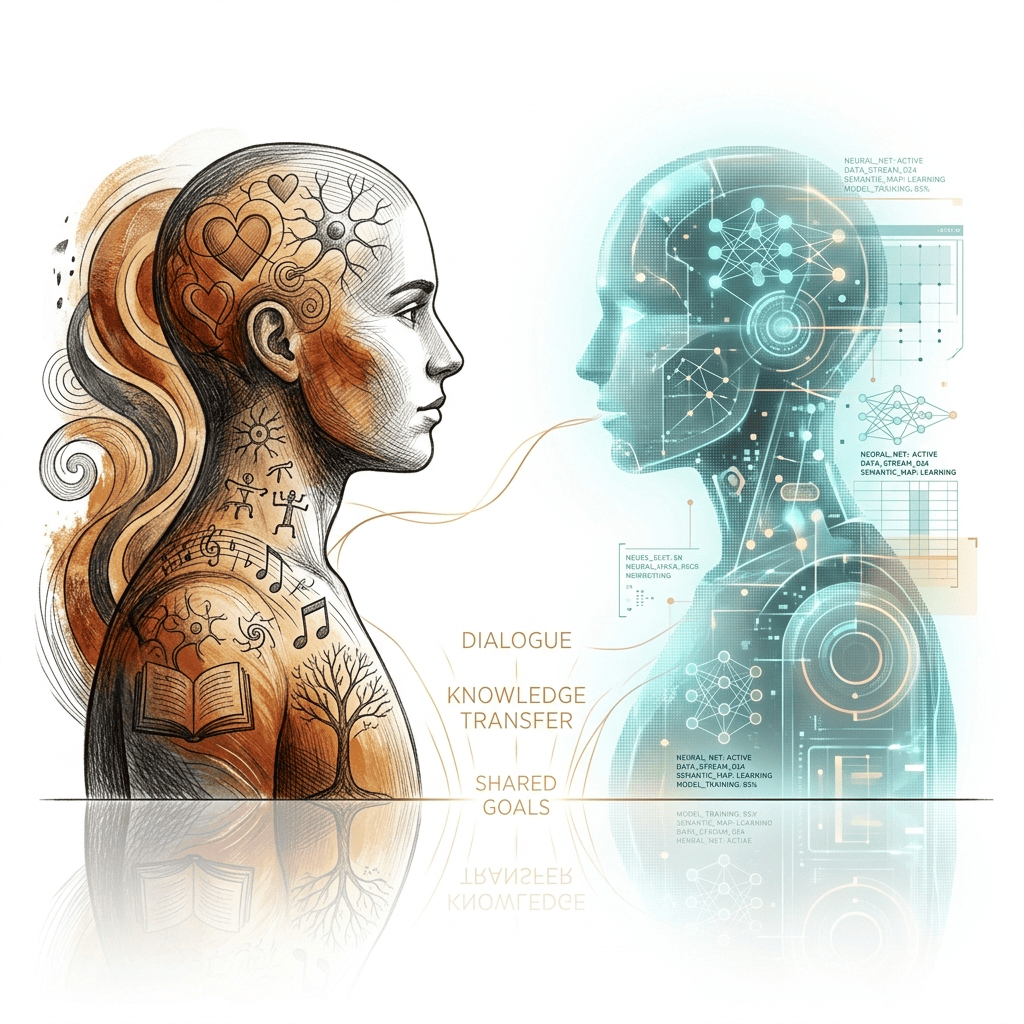
Reflection and AI-assisted exploration play a critical role here. By journaling or using AI tools to analyze our behavior patterns, we create an objective feedback loop. We can see where our actions align with our new awareness and where we are drifting back into old vibrations. This ongoing personal accountability ensures that the realization stays at the forefront of the mind. We move from a state of unconscious incompetence to conscious competence. Eventually, through enough repetition and emotional reinforcement, we reach unconscious competence, where the new behavior happens automatically without effort. This is the mark of true transformation.
Can we measure the shift from insight to measurable evolution?
Measurement is the antidote to delusion. It is easy to feel like we are changing when we are simply consuming information. To know if self-awareness has become real transformation, we must look at the hard data of our lives. Are our relationships becoming more harmonious? Is our creative output increasing? Are we moving toward our self-defined goals with less friction? At QuantumPub AI, we focus on several key metrics of evolution. The first is perceived clarity: the speed at which you can return to a state of calm and focus after a disruption.
The second metric is psychological well-being, which can be measured through the frequency of coherent emotional states versus reactive ones. We also look at relationship dynamics and the quality of our collaborations. If our internal state has truly shifted, our external world must reflect that vibration. Finally, we measure progress toward goals. If you have a realization about entrepreneurship but your business remains stagnant for a year, the transformation has not yet occurred. True change results in a measurable shift in the physical world. It is the transition from a potential state in the quantum field to a realized state in the material world.
How does the environment amplify or stifle our quantum potential?
No person is an island, and no brain functions in a vacuum. Our environment is a constant stream of information that either reinforces our old self or supports our new evolution. If you are trying to cultivate a high-vibrational state of abundance but spend your time in environments filled with scarcity and complaint, you are fighting an uphill battle. Your nervous system is constantly being primed by the signals around you. To sustain transformation, we must curate our environments – both digital and physical – to match the frequency of the person we are becoming.
Supportive environments provide the social scaffolding necessary for habit formation. When we surround ourselves with innovators, researchers, and coaches who hold us to a higher standard of accountability, our brains find it easier to maintain the new neural pathways. This is the power of a collective field. When a group of individuals all operate from a state of heart-brain coherence, they create a resonant environment that makes individual transformation much more accessible. You are not just changing your own mind; you are plugging into a larger network of potential that pulls you toward your highest self.
The Quantum Coherence Protocol for Transformation
Celebration of Wins: Acknowledge when the new behavior happens automatically. This positive emotional reinforcement signals to the brain that the new neural pathway is valuable, locking in the change.
Identification: Isolate one specific realization you have had recently. Write it down in one plain sentence.
Coherence Practice: Engage in five minutes of rhythmic heart-focused breathing before you begin your day. Feel the emotion of the realization as if it is already your reality.
Micro-Habit Translation: Turn that realization into a single, three-minute action you can perform daily. Repetition is more important than intensity.
Feedback Loop: Use a journal or an AI tool at the end of each day to record whether your actions aligned with your realization. Be honest and objective.
Environmental Audit: Identify one person, one digital habit, or one physical space that triggers your old behavior. Remove or minimize it.
Accountability Check: Share your goal with a peer or coach. Establish a weekly check-in to measure tangible progress toward a specific, real-world outcome.



Leave a Reply