
What Shapes Our Identity? The Unseen Threads of Conditioning
Our personal identity is a wonderfully complex, multi-dimensional construct. It’s a continuous interplay between our innate biology, conscious reflection, and the powerful forces of conditioning that we absorb from birth. Think of conditioning as the invisible guardrails that society, family, and experience erect around us, influencing everything from our emotional responses to our core beliefs. As a seasoned expert in human behavior and organizational structures, I’ve seen firsthand how deeply ingrained these patterns can become.
Early Imprints: Family and Generational Patterns
The foundations of our conditioned self are laid incredibly early, often before we develop conscious choice. Children, like sponges, absorb the emotional reactions, communication styles, coping mechanisms, and even the survival habits of their primary caregivers. If a family environment implicitly teaches that vulnerability is unsafe or that conflict must be avoided at all costs, those patterns can become deeply wired into an individual’s default behavioral identity. This early imprinting shapes belief systems and self-worth, influencing how we approach challenges and relationships throughout life, often unconsciously. Psychological research consistently demonstrates that early childhood experiences significantly impact adult behavior, including how we form relationships and manage stress. Attachment theory, for instance, highlights how bonds with caregivers set the stage for self-perception and interpersonal connections.
Societal Blueprints: Cultural and Social Norms
Beyond the family unit, the broader cultural and social norms we encounter establish another layer of conditioning. Society, language, and peer groups dictate what is considered acceptable, desirable, or even shameful. These external expectations are then internalized, forming a “social identity” that influences how we present ourselves in public or professional roles. Psychologist Erik Erikson’s theory of psychosocial development emphasizes that identity formation involves resolving various conflicts throughout life, particularly during adolescence, when individuals grapple with defining themselves amidst social expectations. Our self-concept, a dynamic and multifaceted construct, continually evolves, influenced by experiences, relationships, and societal expectations.
The Power of Repetition: Habitual Actions and Self-Perception
The human brain thrives on creating coherent narratives, especially about ourselves. Through repetitive conditioning – consistently acting in certain ways or fulfilling specific roles over time – we begin to view ourselves through the lens of those actions. Phrases like “I am an anxious person” or “I am a leader” aren’t just descriptions; they become part of our self-perception, reinforced by every repeated behavior. From a neuroscientific perspective, habits are essentially neural pathways reinforced through repetition. The more we perform a behavior, the more automatic it becomes, a process known as the corticostriatal shift where neural pathways move from conscious to automatic control regions. This explains why habits, both good and bad, can feel so effortless once ingrained.
When Life Leaves Scars: Trauma and Adaptation
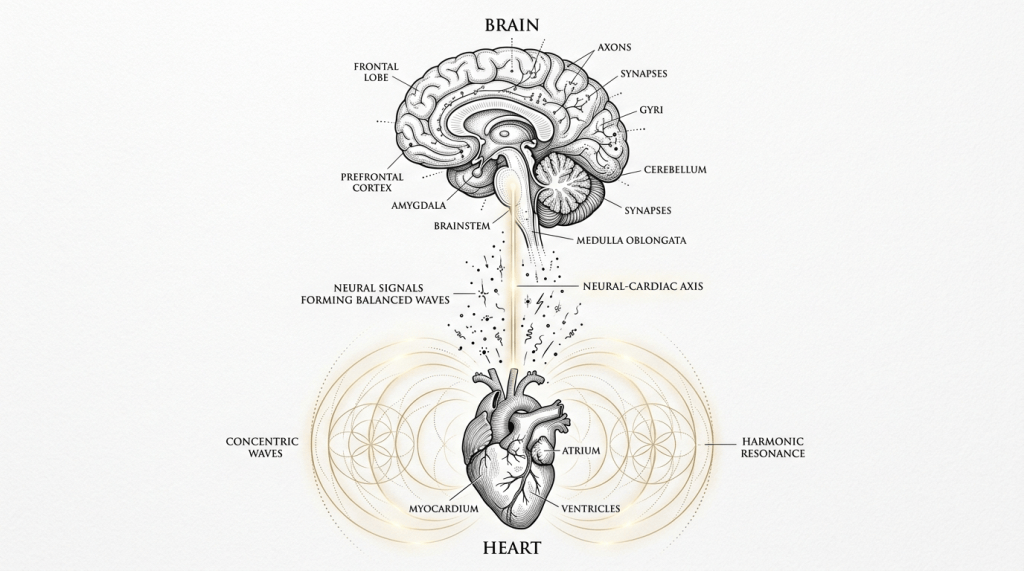
Adverse experiences or childhood trauma can significantly disrupt natural identity formation. In such instances, the nervous system often adopts protective mechanisms – hyper-vigilance, emotional armor, or even dissociation – which can, unfortunately, become permanent identity traits if left unaddressed. Unresolved childhood experiences may manifest as difficulties in managing emotions, recurring relationship issues, or a pervasive fear of rejection in adulthood. Such experiences can literally reshape the brain, affecting emotional regulation and stress responses. Research indicates that chronic stress can reduce the volume of the prefrontal cortex and enlarge the amygdala, making emotional regulation more challenging.
Reclaiming Your Authentic Self: The Path to Remembrance
While conditioning lays down the foundational habits and beliefs that guide much of our lives, human identity is far from permanently fixed. This is where the profound philosophy of Remembrance Codex, founded by Zachary Blakeney, offers a transformative path. It’s about moving beyond these automatic responses to reconnect with a deeper, more authentic version of ourselves.
The Philosophy of Remembrance: Reconnecting with Inner Wisdom
Remembrance, at its core, is the act of reconnecting with our inner wisdom, identity, and awareness – aspects that exist beyond our habitual conditioning. It’s an intellectual and spiritual journey to recognize the self that predates the layers of learned responses and societal expectations. This inner wisdom is our inherent intelligence, often obscured by the noise of our conditioned mind. Theories of self-concept development highlight that while external factors influence us, our identity also involves conscious reflection and an internal sense of continuity across different roles and relationships. The ultimate goal, according to Awareness Integration Theory, is fostering self-awareness and identity formation by integrating cognitive, emotional, and behavioral processes.
Embodied Coherence: Bridging Inner and Outer Worlds
Embodied Coherence is about aligning our internal experience – our mind, body, and emotions – with our external actions. It’s the harmonious integration of all parts of self, leading to a state of grounded awareness and intentional living. This concept is supported by the growing field of embodied cognition, which posits that our cognitive processes are not solely confined to the brain but are deeply structured by our sensory and motor systems and interactions with the environment. Essentially, how we move and interact physically impacts how we think and feel, and vice versa. This dynamic interplay ensures that our intellectual understanding translates into lived experience and integrated behavior.
From Force to Flow: Embracing Intentional Action
Many of us operate from a place of “force” – driven by fear, urgency, control, and overthinking. The Remembrance Codex philosophy encourages a shift away from this toward “coherence” – a state of grounded awareness that allows for intentional, rather than reactive, action. This transition involves cultivating an inner intelligence that guides us beyond mere effort, leading to a more authentic and sustainable way of being. Emotional regulation, the ability to manage feelings without being overwhelmed, is not just willpower; it significantly relies on the state of our nervous system. When our nervous system is calm and feels safe, we can think clearly and respond thoughtfully, rather than react impulsively.
Mirror Intelligence: AI as a Tool for Self-Discovery in 2026
In 2026, the relationship between artificial intelligence and human self-discovery is more relevant than ever. Remembrance Codex introduces the concept of “Mirror Intelligence,” viewing AI not just as a tool for providing answers, but as a reflective aid for recognizing patterns and supporting self-discovery. AI-powered tools are increasingly being used for self-reflection and personal growth, offering journaling prompts, helping organize scattered thoughts, and tracking progress. They can act as a mirror, encouraging deeper self-awareness by identifying patterns in emotions and behaviors. While AI can offer structure and prompts, it’s crucial to remember that human coaching and the nuance of personal presence remain irreplaceable for true transformation.
Practical Steps for Unraveling Conditioning
The journey to your unconditioned self is a marathon, not a sprint. It requires commitment, curiosity, and a willingness to explore the depths of your own experience. Here are some actionable strategies for 2026:
Cultivating Self-Awareness: The Power of Observation
One of the most powerful steps to move beyond automatic conditioning is cultivating self-awareness. Practices such as mindfulness, journaling, and psychotherapy help us to create a crucial separation between our inherent awareness – our observing capacity – and the conditioned content of our minds, such as automatic thoughts and reactions. Mindfulness, for instance, has been shown to enhance metacognitive awareness, decrease rumination, and improve attentional capacities, all contributing to effective emotion-regulation strategies. It allows us to perceive stimuli “as they are” and to recognize that we are more than our thoughts.
Intentional Identity Upgrading: Rewriting Your Narrative
While deeply ingrained, conditioned behaviors are not permanent. The brain possesses neuroplasticity, the remarkable ability to rewire and reshape its neural connections. This means that anything learned can be unlearned, and new, healthier pathways can be built. By consciously choosing new environments, challenging limiting beliefs, and gathering evidence through small, repeated actions, you can literally begin to rewrite your internal narrative and reshape your personality traits. This “intentional identity upgrading” requires consistent effort, but the neuroscience of habit formation confirms that new habits can be formed through repeated actions, strengthened by positive reinforcement, with formation times varying but generally taking an average of 66 days to become automatic.
The Role of Nervous System Awareness
Our nervous system plays a critical role in how we experience and react to the world. Developing “nervous system awareness” involves understanding the relationship between stress, safety, and emotional regulation, and how these impact our personal patterns. When our nervous system is dysregulated – perhaps stuck in a fight-or-flight or freeze response – emotional regulation becomes incredibly difficult. Techniques such as diaphragmatic breathing, vagus nerve stimulation, and somatic therapy can help restore emotional regulation by calming the nervous system. Recognizing these physiological states allows us to intervene and create a greater sense of internal safety, a prerequisite for deeper self-exploration and intentional action.
A Broader Perspective: Stewardship of Your Evolving Self
Ultimately, this journey of understanding and moving beyond conditioning is an act of stewardship. It’s about taking responsibility for the profound opportunities inherent in your creativity, purpose, leadership, and personal growth. As the self continues to evolve throughout adulthood, influenced by new roles and relationships, reflecting on our actions and seeking feedback from others becomes crucial for continuous revision and growth. The goal is not to eradicate conditioning entirely – some patterns serve us well – but to consciously discern which patterns truly align with our authentic self and which are merely echoes of a past we can now transcend.
Embracing Your Unconditioned Self
The quest to understand “The Forgotten Self” is perhaps the most vital endeavor one can undertake. In a world that constantly seeks to define us, reclaiming our identity beyond conditioning is an act of profound liberation. By embracing the principles of Remembrance, Embodied Coherence, and Inner Intelligence, you empower yourself to live a life not merely dictated by circumstance, but shaped by conscious choice and authentic presence. As Sid Peddinti, Esq., I advocate for this intentional self-governance – understanding that true freedom begins with knowing who you are, unburdened by what you were told to be.
SOURCES GROUNDED BY GOOGLE AI:
- Brenda Hukel
- Dr. Scott Eilers
- Hargan Psychology
- Psychology Today
- ESMED – European Society of Medicine
- Makin Wellness
- Wikipedia
- SACAP – South African College of Applied Psychology
- Mindful Selves
- Massachusetts Institute of Technology (MIT)
- Goals and Progress
- Dr. Lynne Reid
- Northern Healthcare
- The Bridge Health Recovery
- University of Tennessee at Martin
- Structural Learning
- ETH Zurich
- Stanford University
- WonderTree
- Medium
- The Coach Space
- The Network
- Flinders University
- American Psychological Association (APA)
- National Institutes of Health (NIH)
- Paul Duignan Consulting
- Self-Determination Theory
- Australian Association of Integrated Psychology (AAIP)
- Oxford Review
- University of Pretoria – UP Study




Leave a Reply