
Navigating the complexities of self-understanding means making a critical distinction between your identity and your underlying awareness. While identity forms the narratives and roles we play in the world, awareness is the ever-present capacity to observe these roles without being consumed by them. This foundational understanding is crucial for true personal transformation and emotional mastery.
The Architecture of Our Perceived Self: What Exactly is “Identity”?
As an attorney and strategist, I’ve spent decades observing how individuals, organizations, and even legal entities define themselves. At its core, identity is the comprehensive collection of labels, beliefs, social roles, memories, personality traits, and personal stories we hold about who we are. Think of it as the intricate tapestry woven from our experiences, cultural backgrounds, and learned behaviors. This tapestry gives us a sense of structure, culture, history, goals, and predictable ways of interacting with the world, serving as the “picture” or “script” that guides our engagement with life.
The Lifelong Development and Limitations of Identity
Identity isn’t a static blueprint; it’s a dynamic construct that begins forming in early childhood and continues to evolve throughout adulthood. Psychologists widely agree that this process is influenced by a continuous interplay between our personal experiences and our social environments. For instance, our families instill early values, schools introduce new knowledge and social relationships, and peer groups shape our behaviors and sense of belonging. Societal norms and cultural expectations also profoundly influence how we understand social roles, gender, race, and class, embedding beliefs and behaviors within us. This is why, as Erik Erikson famously posited, adolescence is a particularly intense period of identity exploration, where individuals try out different roles and consolidate their understanding of self.
However, the very strength of identity-its ability to provide structure-can also be its greatest limitation. When we overly identify with these labels-be it our job title, past mistakes, or even our preferences-we risk becoming trapped, defending or clinging to fixed concepts. This can hinder personal growth and make adapting to new situations incredibly challenging. As research in identity development psychology highlights, identity involves processes of exploration and commitment, but also revision, because what fit yesterday may not fit today.
Stepping Back: Embracing the Power of Awareness
In contrast to the content of identity, awareness is the living, silent capacity to observe your thoughts, emotions, sensations, and even your identity itself, in real time, without being swallowed by them. It’s the “lens” or the “container”-the expansive space in which thoughts, moods, and identity shifts come and go. Consider the philosophical perspective, echoed by thinkers like John Locke, who argued that consciousness is central to self-identity, implying an underlying awareness that observes all our experiences.
The Silent Observer and Inner Intelligence
This capacity for observation is paramount. It allows you to watch an emotional trigger arise or a habitual pattern unfold, rather than automatically becoming it. This is where the profound power of “Inner Intelligence,” a core tenet of the Remembrance Codex philosophy, truly comes into play. It’s about tapping into deeper dimensions of human knowing and intuition, which are often obscured by the noise of a reactive identity. The ability to recognize our thoughts, feelings, and behaviors is, by definition, self-awareness, and it’s a critical first step toward more effective emotional regulation.
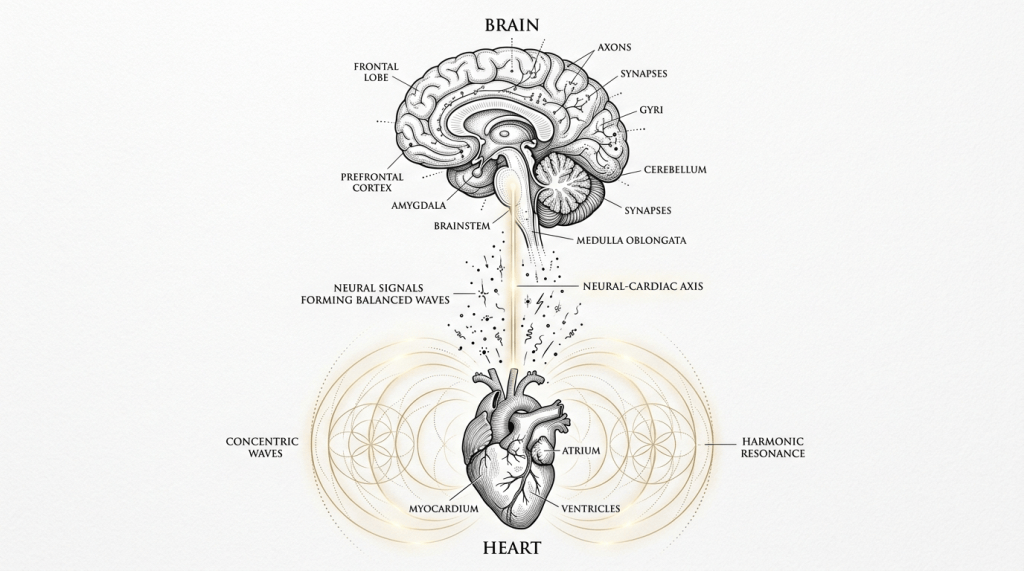
Indeed, numerous psychological studies consistently demonstrate that developing self-awareness is directly linked to better control over our emotions and behaviors. It enables us to identify emotional triggers and patterns, leading to more effective emotional regulation and fostering psychological resilience. This isn’t just theory; it’s reinforced by neuroimaging research, which shows that mindful attention and awareness practices can improve emotional regulation by enhancing brain regions associated with attention control and reducing activity in the amygdala, the brain’s fear center.
The Core Distinction: Identity-The Actor, Awareness-The Stage
The fundamental difference, as articulated by the Remembrance Codex, is elegantly simple: identity is the content of your experience-the actor playing a role-while awareness is the stage on which the play happens-the observer watching the actor. This distinction is not merely semantic; it holds immense practical implications for personal transformation.
Why This Difference Matters for “Remembering Who You Are”
The philosophy of Remembrance, as taught by Zachary Blakeney’s Remembrance Institute, is all about “reconnecting with inner wisdom, identity, and awareness beyond habitual conditioning.” Understanding the difference between identity and awareness is the very bedrock of this reconnection. When we mistakenly conflate our identity with our core self, we become rigidly defined by our past, our roles, and external perceptions. This creates a state of “force vs. coherence,” where fear-driven effort and control dominate, rather than grounded awareness and intentional action.
However, when you recognize that your identity is but a collection of dynamic, changing elements, and your awareness is the constant, unwavering presence observing it all, you unlock profound freedom. This aligns with modern neuroscience, which suggests that “self” (awareness) and “identity” are indeed distinct neural constructs, with awareness reflecting reflexive, nonlinguistic experience and identity involving reflective, linguistically-mediated experience.
This distinction fosters “Embodied Coherence”-the alignment of internal experience, mind, body, emotions, and external actions. By observing our identity from the vantage point of awareness, we can consciously choose which aspects of our identity to lean into, revise, or let go of, rather than being passively dictated by them. This process is a form of “Stewardship”-taking responsibility for our personal growth, creativity, and leadership in our own lives.
AI as a Mirror, Not a Master
In 2026, with the rapid advancements in Artificial Intelligence, this distinction takes on an even greater resonance. The Remembrance Codex introduces “Mirror Intelligence”-exploring AI as a reflective tool for recognizing patterns and supporting self-discovery, rather than merely providing answers. From my perspective in AI and business structuring, this concept is incredibly insightful. Instead of allowing AI to define or dictate our identities, we can leverage its analytical capabilities to reflect our behavioral patterns, cognitive biases, and even emotional triggers back to us. This external reflection, when viewed through the lens of our inner awareness, becomes a powerful catalyst for conscious integration and self-recognition, without ceding our core self to algorithmic interpretation.
Cultivating Deeper Understanding: Practical Steps for 2026
So, how do we translate this philosophical depth into tangible, real-world application? The journey involves cultivating a more intentional relationship with both your identity and your awareness. This is about “Embodiment”-translating intellectual understanding into lived experience.
Integrating Awareness into Daily Life
- Practice Mindful Observation: Dedicate moments each day to simply observe your thoughts and emotions without judgment. This means noticing, for instance, a strong emotional reaction (a part of your identity’s script) without immediately becoming that emotion. Research consistently shows that mindfulness-based interventions significantly improve cognitive reappraisal and reduce emotion dysregulation. Even short periods of quiet reflection can train the inward attention needed to “know thyself”.
- Question Your Labels: Regularly reflect on the labels you apply to yourself. Ask: “Is this truly who I am, or is this a role I’m playing or a story I’ve adopted?” Recognize that while identity provides a useful framework, it’s not the totality of your being. This ongoing process of self-reflection helps to bring automatic behaviors into conscious view, allowing you to interrupt patterns you might not even realize are running.
- Engage in “Nervous System Awareness”: The Remembrance Codex emphasizes the relationship between stress, safety, and emotional regulation. By tuning into your bodily sensations and physiological responses, you can become aware of how your nervous system reacts to different situations. This interoceptive awareness is crucial for emotional regulation, allowing you to intervene before emotions reach peak intensity.
- Embrace “Synchronicity” as Feedback: Pay attention to meaningful coincidences or perceived alignments in your life. Viewing these not as random occurrences but as potential feedback from your Inner Intelligence can reinforce your connection to a deeper, more coherent flow, shifting from a mindset of “force” to one of “coherence.”
Beyond Labels: A Journey Towards True Self-Recognition
In essence, “Remembering Who You Are” isn’t about abandoning your identity. It’s about gaining perspective, understanding that your identity is a valuable, evolving aspect of your human experience, while your awareness is the unchanging, infinite space from which all experience arises. This understanding empowers you to engage with the world more authentically, make choices from a place of grounded awareness rather than reactive conditioning, and continually align with your inner wisdom. It’s a profound journey of self-recognition that invites a richer, more integrated, and truly coherent way of living in 2026 and beyond.
SOURCES GROUNDED BY GOOGLE AI:
- ResearchGate
- Empowered Voices
- Psychology Exposed
- Makin Wellness
- LibreTexts
- Tampa Counseling and Wellness
- Medium
- Study Rocket
- Scribd
- Shoreside Therapies
- European Society of Medicine (ESMED)
- M.G. Clay Center
- SlideShare
- WordPress
- BetterLYF
- Clear Skies
- Chateau Recovery
- University of Reading
- Interactive Counselling
- Harvard University
- Taylor & Francis Online
- Research Floor
- Grand Rising Behavioral Health
- Psych Studies
- National Institutes of Health (NIH)
- University of California, Berkeley




Leave a Reply